Auto tariffs could lead to few options, higher prices for used cars

Should you buy a car before auto tariffs go into effect?
President Donald Trump has announced a 25% tariff on imported cars and key auto parts. Here’s what it means for consumers and automakers.
- A 25% tariff on imported cars and light-duty trucks will likely increase both new and used car prices.
- The used car market is already experiencing tight supply due to fewer leases and lower new car sales three years ago.
- Consumers may have to consider older used vehicles with more mileage due to the increasing prices.
A 25% tariff on all cars and light-duty trucks imported into the U.S. that’s set to go into effect next week won’t just cause new car prices to rise. Used car prices will also likely increase, analysts say, and selection, especially of lightly used vehicles, will dwindle.
Consumers looking for a deal may already be too late, these analysts say.
“We’re sitting at this point where supply is tight,” said Jeremy Robb, senior director of economic and industry insights at Cox Automotive. “Sales are running higher. People were already a little bit worried about increased prices for used vehicles.” President Donald Trump’s announcement of a 25% tariff on imported vehicles will “probably put a little bit more fuel on the fire,” he said.
Days’ supply, a measure of the number of days it would take at the current sales rate to deplete available inventory, is 39 days on the used vehicle market, Robb said, which he said is tight relative to long-term average and the tightest it has been since 2021.
The tariff news comes as the auto industry is in the midst of what is typically a strong car-buying season due to consumers receiving their tax refunds. This year, many consumers have known that automotive tariffs were being considered and may have led to them shopping for a vehicle in the typically slower winter months, analysts say.
“Every unit of inventory, both new and used, is stronger today and has more value than it did a few days ago,” said Ivan Drury, director of insights for the automotive research site Edmunds. “That’s even without tariffed vehicles showing up on the lots yet because (dealers) know for a fact that supply is going to be constricted on both ends. Give it about a month, two months, and things are going to get ugly. So flexibility as a customer is probably not going to be really strong.”
What led to the already-tight supply of used vehicles is fewer new car sales three years ago and a low volume of drivers leasing vehicles, Drury said. Typically, when leases end after three years, those vehicles are then sold in the used vehicle market. The slowdown three years ago is squeezing used inventory now.
“We already have constrained supply on that end, coupled with the fact that if the tariffs are as aggressive as they are being proposed, there’s not a lot of workarounds,” he said. “How many customers with a lease are really going to come back to the market and say, ‘Yeah, I’ll turn that in at one of the worst times possible.’ What are they going to do? They’re going to extend their lease.”
Expect used vehicle prices to increase
Once new car prices increase as expected because of the tariffs, used car prices will increase too.
Customers who may have been in the market for a new vehicle may potentially switch their search to the used vehicle market if the prices are too high, leading to more demand for used vehicles and higher prices, said Kevin Roberts, director of economic and market intelligence at the car shopping site CarGurus.
The average price of a used car has already slightly ticked up over the past month after months of decreases, according to CarGurus. The average used car price was $27,051 on Thursday, according to CarGurus, down nearly 3% since November but higher than it was at the start of February, when the average used car price was $26,910.
Roberts said other factors are contributing to higher used vehicle prices, such as aluminum tariffs that could be increasing the prices of certain parts needed to repair and recondition used vehicles for sale.
Consumers may move to older vehicles
Higher prices for used vehicles — especially lightly used vehicles — will likely mean car shoppers will consider older used vehicles that have rolled up more mileage.
“In my mind, that is another inflationary impact to consumers,” Robb said. “They’re paying more for a vehicle than they were five years ago. They’re getting an older car … if they only want to pay the same price. Then there’s likely more wear and tear and things they need to take care of over time on that car. So it’s another added cost component to that, too.”
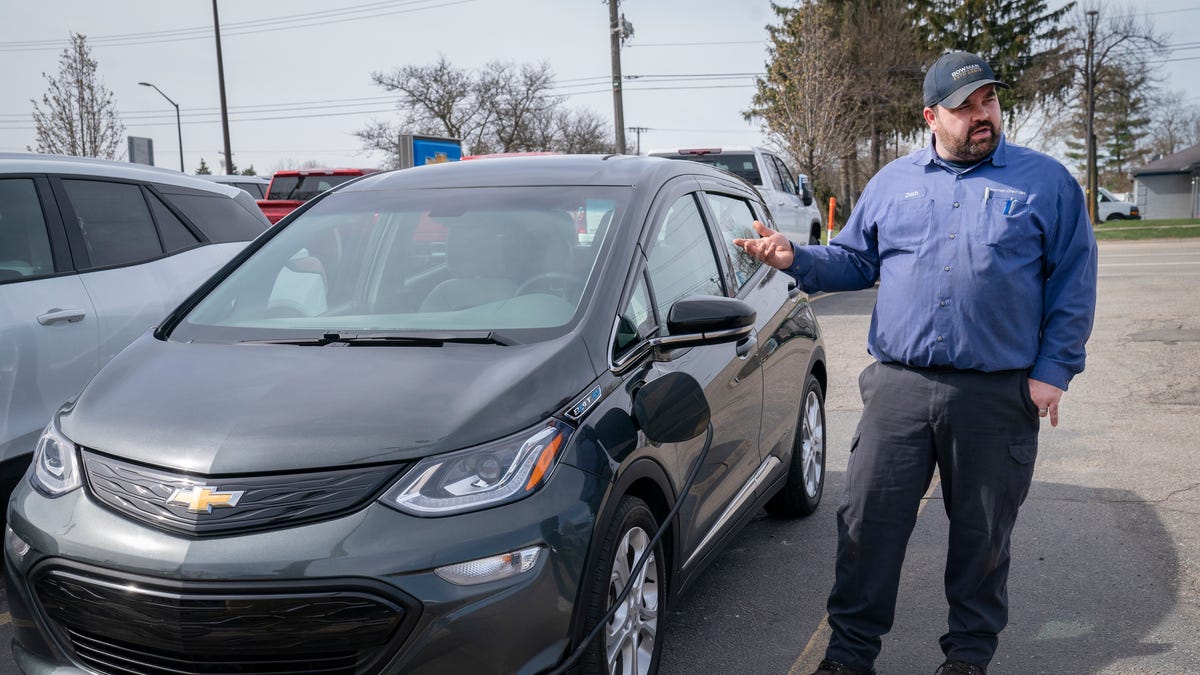
There is one type of vehicle that’s a good value play in this current market, Roberts said: Used electric vehicles, like Nissan Leaf and Chevy Bolt.
“They have a lot of really great kind of lower price point options out there,” Roberts said. “So, kind of surprising, but it’s definitely a unique kind of market out there.”
Contact Adrienne Roberts: [email protected].
link